
Play video
If you've caught yourself thinking, "I'm good at what I do, but somehow I have fewer clients than I used to" you're not imagining it. And it's not a confidence problem or a pricing problem. It's a visibility problem - and in 2026, visibility means something completely different than it did five years ago.
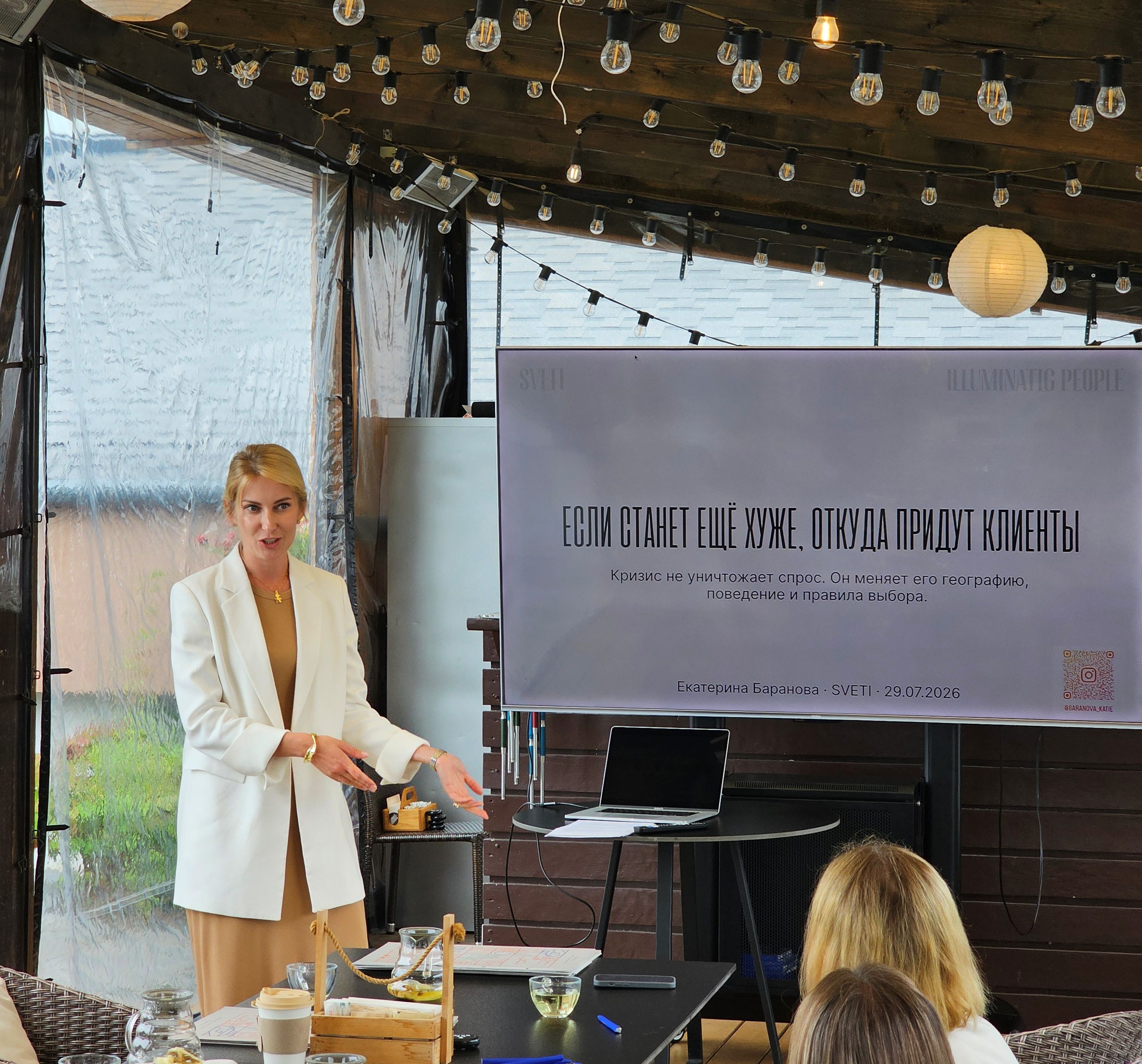
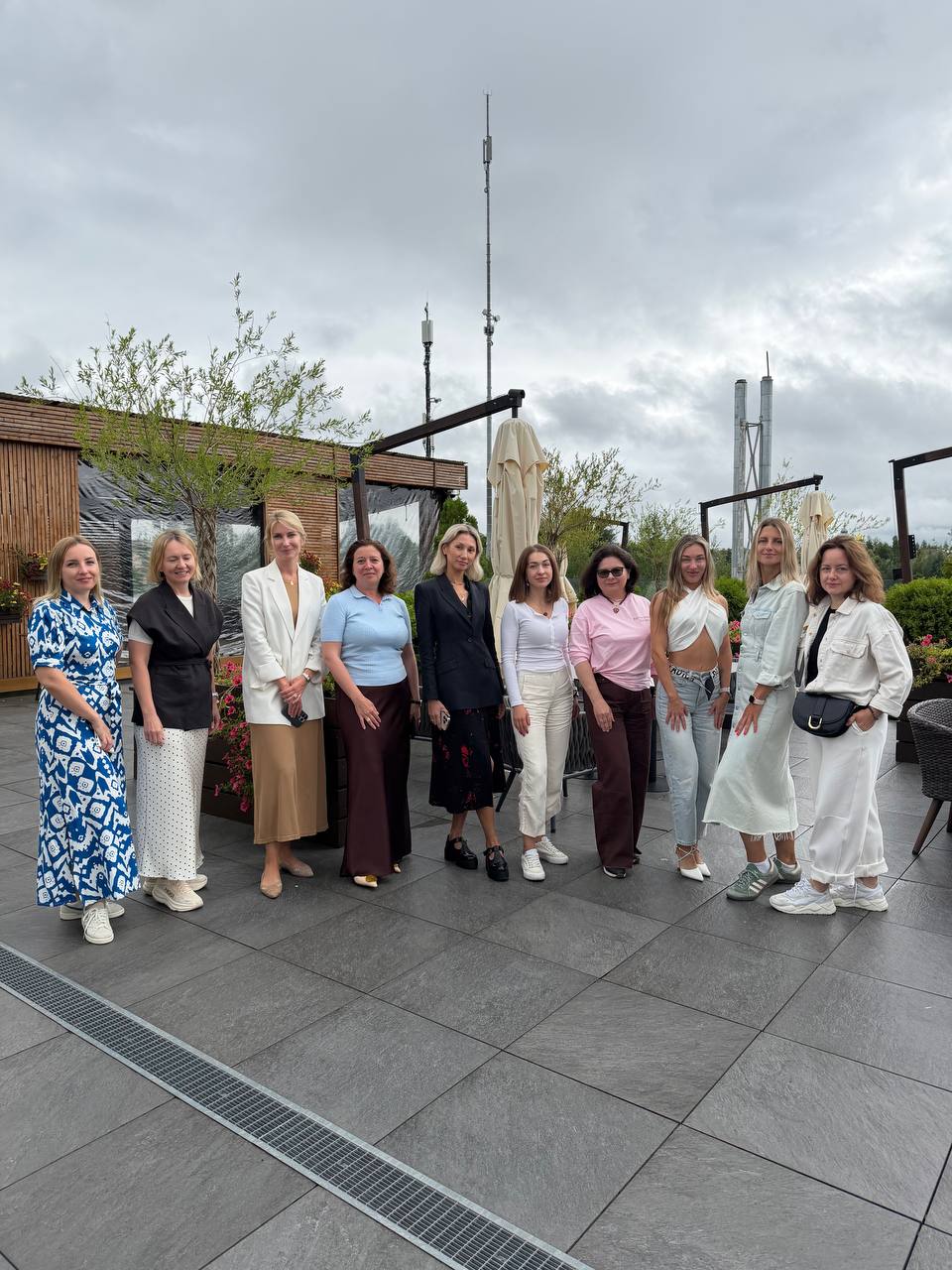
On July 29, 2026, I spoke to a women's business breakfast community for founders and entrepreneurs across the CIS on exactly this question: if the economy gets worse, where will your next client come from? This article is the extended version of that talk - the data, the trends, and the ten concrete moves I'm telling every expert, coach, consultant,and founder to make right now.
The Uncomfortable Experiment I Ran on Myself
Before I stood on that stage, I did something a little terrifying. I typed into an AI chatbot the exact question a potential client might type when searching for someone like me: "Who is Ekaterina Baranova, SVETI?"
I run a personal branding and PR agency. Ibuild digital visibility for other people, professionally, every single day.And even I found a gap.
In Russian, the AI pulled results from independent,third-party sources - Forbes, RBC, T-Bank's editorial section, award juries. In English, it mostly surfaced my own channels: LinkedIn, Medium, Instagram. Less volume in Russian, but every mention came from someone else's hands - which, as you'll see below, matters more than volume.
If a digital capital gap like that exists for someone whose entire job is closing that gap for others, what's happening to everyone in that room who has never once thought about it?
.jpg)
Personal Brand vs. Digital Capital: They Are Not the Same Thing
This is the single most important distinction I make with every client:
- Personal brand is how a human feels about you - sympathy, character, voice. It's emotional and immediate.
- Digital capital is how a machine finds you - mentions, case studies, verifiable facts, consistency across platforms.It's measurable and it compounds.
Advertising is an expense. Digital capital is an asset. Ad spend disappears the moment the budget runs out. Digital capital keeps working for you for years - including inside AI answers you never see being generated.
The Three Letters Deciding Whether You Get Found
If you've heard of SEO but not AEO or GEO,you're behind — and so is almost everyone else, which is actually your opportunity.
- SEO - Search Engine Optimization. Getting your site to rank higher on Google. Over 20 years old, still relevant.
- AEO - Answer Engine Optimization. Getting picked as the direct answer a search engine gives, without the user ever clicking through to a site.
- GEO - Generative Engine Optimization. Getting named by name inside a generative AI's answer - Chat GPT, Perplexity, Gemini,Claude. This is the newest and least crowded battlefield.
The Macro Picture: Why This Matters Right Now
I don't build strategy on vibes - I build it on data,and the data right now is genuinely dramatic on both sides.
The risk side:
- The share of fund managers naming an AI bubble as the top market risk jumped from 11% to 45% in six months.
- $2.5 trillion is being spent on AI infrastructure this year alone.
- The U.S. Treasury has warned that AI companies are now more deeply embedded in the economy than the dot-coms ever were - meaning a correction would hit markets, credit, data centers, chips, and energy simultaneously.
- The tech sector already cut 78,000 jobs last year. 59 out of every 100 workers will need retraining. 11 won't get it.
The opportunity side:
- The World Economic Forum projects a net gain of 78 million jobs by 2030 - 170 million created against 92 million displaced.
- Medicine, education, skilled trades, and top-tier creative work are all growing 15–25%.
- AI has no personal liability, no empathy, and no lived presence. Wherever a client needs that, you are structurally protected.
And here is the trend I most want you to sit with: according to McKinsey, AI can automate roughly 45%of individual tasks - but it can fully replace only 5% of entire professions That single stat rewrites the whole panic narrative.
The Middle Class Isn't Vanishing - It's Splitting in Two
This is the headline, so let's say it plainly: the middle class is not being wiped out. It's stratifying.
- Growing: recognized experts with a name people already trust.
- Being hollowed out: routine work performed strictly by instruction, with no name attached.
- Growing: anything that genuinely cannot be automated physically or emotionally - hands-on skilled work, and high-trust human judgment.
The real question isn't "will the middle class survive?" It's: will you end up in the recognizable half, or the replaceable half? And that answer is decided by choices you're making - or not making - right now.
Four Honest Questions to Ask Yourself, Silently
1. Is your service unique without your name attached to it?
2. Would you show up if someone asked an AI a question about your topic today?
3. Is your share of referral-based clients growing?
4. Can you name three topics your colleagues would associate with you instantly, without hesitating?
I answered "yes" to three of these without blinking. Question two, the AI one, was a no for me a week before that stage. One gap out of four - and it was worth more than the other three combined.
Top 10 Things Every Expert Should Do in 2026 to Stay Findable
If the world gets harder, here is exactly what to do - in order.
1. Audit your own AI footprint today. Ask Chat GPT,Perplexity, and other AI tools who you are. Do this before your competitors doit for you.
2. Build a Q&A-format anchor on your own site. AI systems reward clear, direct, question-and-answer structured content far more than polished narrative copy.
3. Choose 3–5 signature topics and become the obvious, repeated citation for them - don't try to be find able for everything.
4. Stop chasing volume; chase authority. A single mention in one respected outlet outweighs 1,000 posts on your own channel - Google flags mass-identical content as duplicates, and it simply stops indexing.
5. Go back to your own client list. Pull everyone from the last 1–2 years, reach out personally with a real reason, do a quarterly check-in, and run a quick "why did you buy from me"interview.
6. Find neighbors, not competitors. Cross-refer with adjacent specialists whose clients already need you: a psychologist with a nutritionist, a divorce coach with a family lawyer, a stylist with an esthetician, a real estate agent with a property lawyer.
7. Go where your audience already gathers. Two or three well-chosen closed communities, where you help for free before you ever sell, will outperform a month of paid ads.
8. Own one channel completely - the only realestate that's actually yours. Use it consistently: recurring breakdowns on Telegram, indexable long-form interviews on YouTube, first impressions on Instagram.
9. Be a guest, not just a host. Third-party validation carries more weight than self-promotion ever will. Build a list of 10 – 15 relevant podcasts and pitch a specific topic, not a general appearance.
10. Expand into new markets one at a time, priced in USD. Enter one country where you already have a foothold, learn the local platform of choice, land one local case study, and only move to the next market after your first real client - not before.
What This Means for You
None of this is theoretical for me. This is the exact playbook SVETI runs for founders, experts, and public figures across Israel,the CIS, Europe, and the U.S. - and it's the same audit I ran on myself before walking on that stage.
If the market gets harder, the experts who already built their digital capital won't need to compete for attention. They'll already have it.