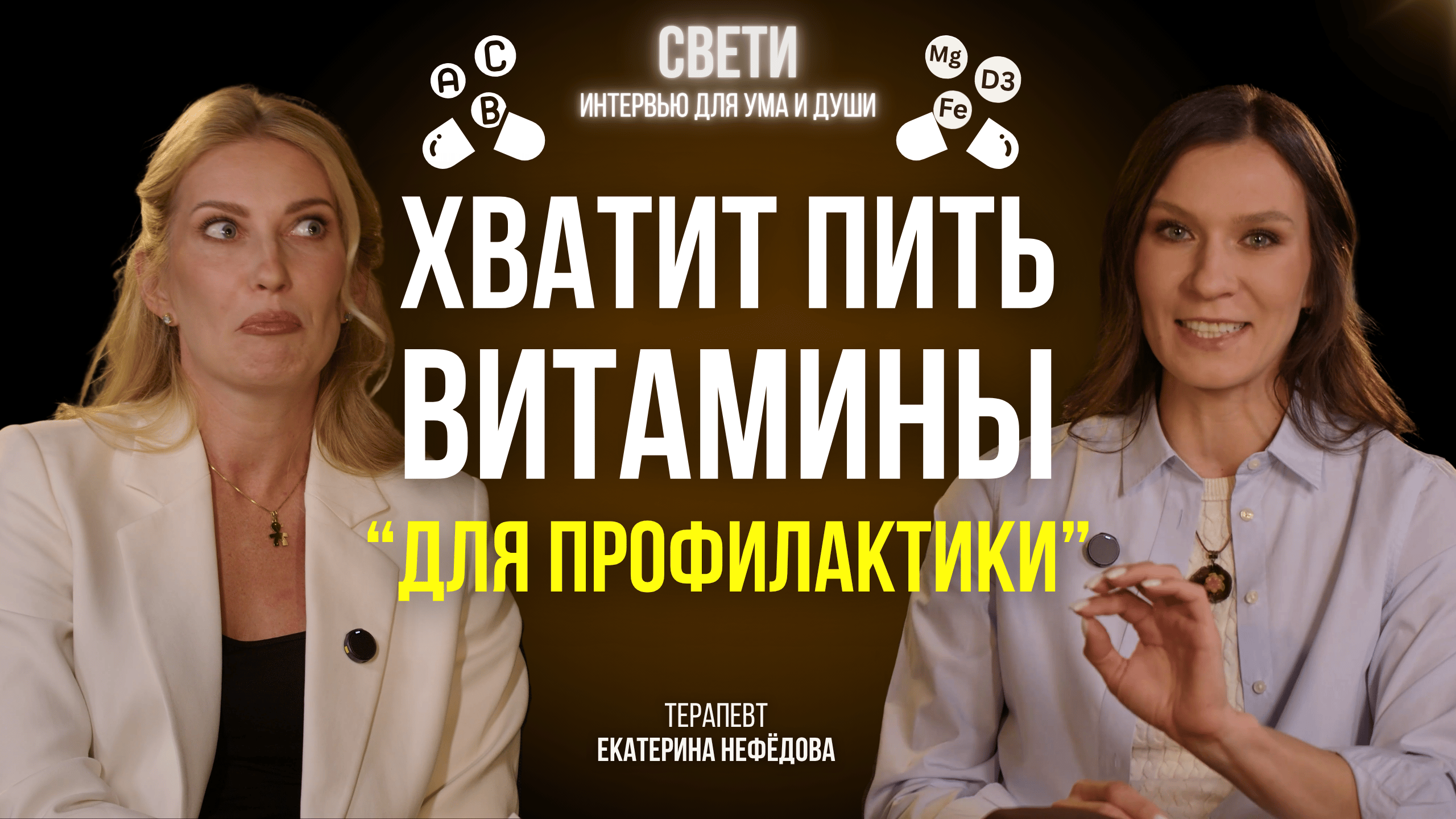

Play video
Who Is Dr. Ekaterina Nefedova?
Dr. Ekaterina Nefedova is a physician specializing in internal medicine, neurology, and preventive medicine, with more than two decades of clinical experience. As Chief Physician at DN Clinic, she takes a broader view of health — looking beyond individual symptoms to understand what may be driving them.
What We Talk About
Fatigue, brain fog, irritability, anxiety — we are quick to blame stress, magnesium deficiency, or “hormones.” But how often are those explanations actually correct?
In the conversation, Nefedova cuts through some of the most common health assumptions: when iron or B12 deficiency really matters, what vitamin D can — and cannot — tell us, whether magnesium actually helps with stress, and what cortisol has to do with the way we feel.
They also discuss hormonal changes after 40, panic attacks, psychosomatic symptoms, and why a meaningful medical consultation cannot always be reduced to 15 minutes and a list of tests.
Not Another Conversation About “Miracle Vitamins”
This is a conversation about learning to understand your body — rather than diagnosing yourself through social media.
If you have been feeling unusually tired, struggling with sleep, noticing changes in memory or mood, or simply wondering why your energy is no longer what it used to be, this conversation may offer a different way of looking at familiar symptoms.
Why SVETI Made This Interview
At SVETI, we look for people who can make complex subjects accessible — and conversations that leave you thinking long after they end.
Dr. Ekaterina Nefedova is one of them.