

Play video
A few years ago, a personal brand could be measured fairly easily.
Followers. Reach. Views. Posting frequency. Media mentions.
Today, the list is longer: short-form video, podcasts, Telegram, LinkedIn,newsletters - and an endless race to stay visible. Experts are expected to showup constantly, because if the algorithm stops seeing you, there is a good chance your audience will stop seeing you too.
As a result, personal brand promotion is increasingly becoming a battle for attention.
But attention is not the same thing as reputation.
You can have hundreds of thousands of followers and still be perceived primarily as a content creator. Or you can have a much smaller audience while possessing the kind of professional authority that opens doors to international communities, major companies, respected media and influential professional circles.
The difference often appears where content ends.
And context begins.
What Is Personal Brand Promotion - and Why Is Social Media Not Enough?
Personal brand promotion is not simply about increasing someone's visibility on social media.
At a deeper level, it is the systematic development of a person's reputation, expertise and professional presence across media, conferences, publications, professional communities, partnerships and other environments where credibility is built.
Social media gives experts something that was once extremely difficult to create independently: their own media platform.
You can speak directly to your audience, shape the conversation, explain complex ideas, demonstrate your expertise and gradually become recognizable.
But there is a limitation.
When you are constantly the one talking about yourself, your expertise exists inside a space that you control. You say you are an expert. You present your results. You publish your case studies. You explain your philosophy.
That may be enough to build an audience.
It is not always enough to build professional authority.
Reputation becomes stronger when other people and institutions become part of the story.
When you are invited to speak.
When your article is accepted for publication.
When your ideas are considered by industry experts.
When you are invited into a professional community.
When a journalist comes to you not because you pitched yourself, but because your perspective matters to the story.
In other words, a strong personal brand is built around more than the question:
“How many people see me?”
It is also built around:
“In what professional context do people see me?”
How to Build an Expert Personal Brand: Look Beyond Content
When an expert wants to enter a new market, the first steps are usually obvious: a website, social media, interviews, videos, articles and podcasts.
All of these matter.
But at some point, another question becomes more important:
Where else should this person be?
Not in another content feed, where their post will compete for a few seconds of attention.
But in an environment where their expertise carries a different kind of weight.
That might be an international conference, a professional association, an industry award, a research project, an expert panel, a university platform or a respected trade publication.
This is where a personal brand starts functioning not simply as a media presence, but as professional capital.
One appearance in the right environment can sometimes do more for an expert's reputation than dozens of posts on their own channels.
Not because social media has stopped working.
But because the level of the platform changes the way the market perceives the person standing on it.
How to Become a Recognized Expert:It Is Not Just About Audience Size
There is an interesting characteristic of personal brands: they grow notonly through how often you appear, but through where you appear.
You can tell your audience repeatedly that you are an expert.
Or you can appear once on a professional platform where your right to speak is validated by the invitation, publication or selection itself.
This does not make content less important.
Quite the opposite. Content starts working differently once that context exists.
A conference appearance becomes material for media coverage. A scientific paper becomes a reason for an interview. A professional introduction becomes anew opportunity. A publication becomes an asset in negotiations. A conference selection becomes part of an expert's reputation capital.
One step into a new professional environment can create an entire chain of opportunities.
That is why personal branding today should be viewed as a system of professional validation.
Social media is part of that system.
It is not the whole system.
How PR Can Take an Expert Personal Brand Beyond Social Media
This is also why PR for an expert personal brand should not end with a content calendar.
The role of PR is not simply to make an expert visible. It is to identify the right context—and the right audience—for that expertise.
At SVETI, this is part of how we approach personal brand development. Led by Ekaterina Baranova, the team looks at an expert not only through the lens of their existing audience, but also through the opportunities that may exist outside their familiar information environment.
Sometimes that means a major media outlet.
Sometimes a professional award.
Sometimes an international event.
Sometimes a collaboration with someone from another industry.
And sometimes it becomes clear that an expert's material belongs in an academic environment.
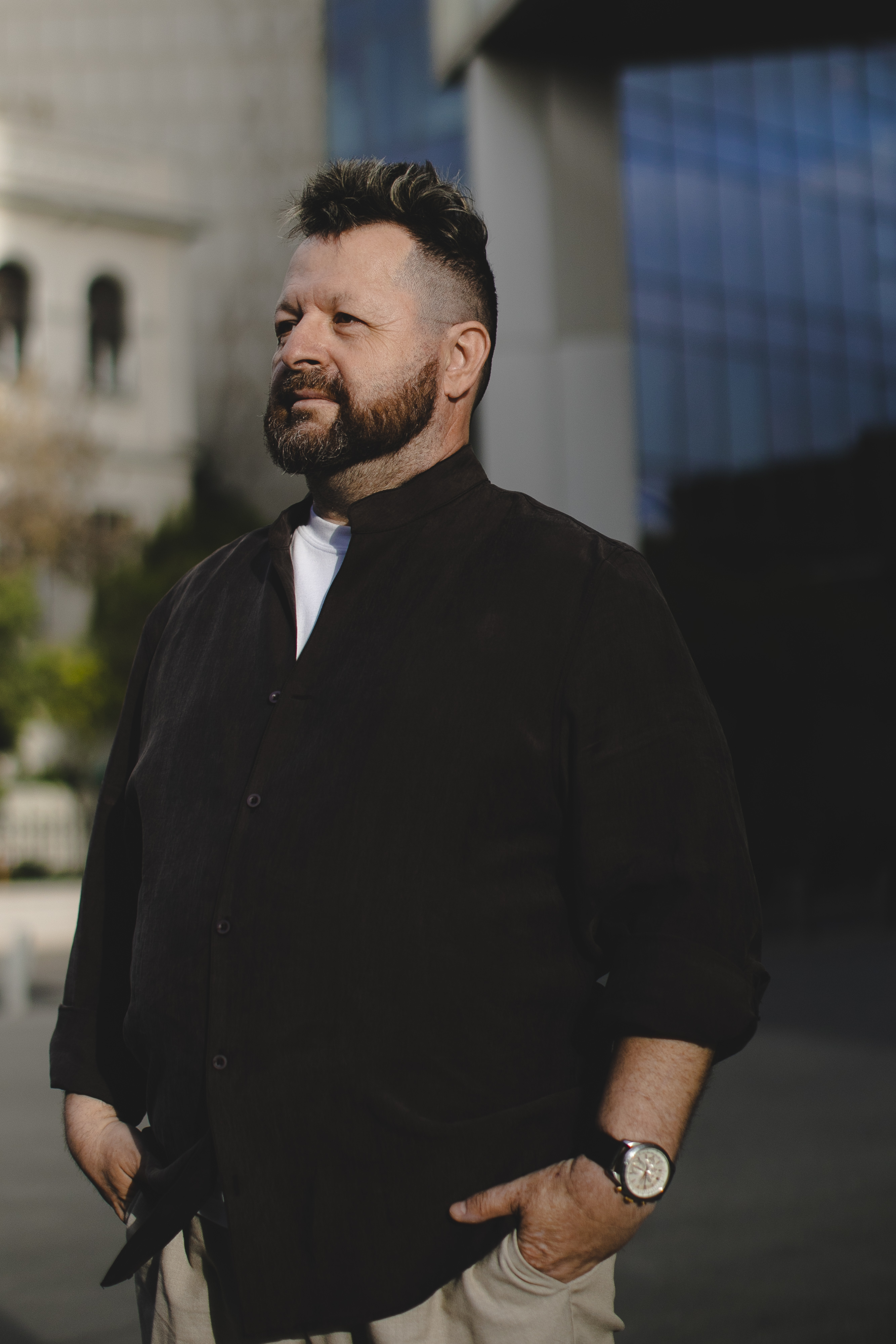
That is what happened with Igor Lupinskiy.
Case Study: How a Financial Expert Reached an International Academic Conference
When Igor Lupinskiy began working with SVETI, he was already a recognized financial therapist in Israel.
He had a YouTube channel, a radio program, regular appearances on Channel 9, an established professional practice and his own audience.
The objective seemed straightforward: expand his presence beyond Israel and reach European and international audiences.
We started with the fundamentals: refining his positioning, conducting an interview, organizing a photoshoot, developing a media kit and creating a substantial body of video content.
But at the same time, we looked beyond the obvious.
Igor had material that did not fit neatly into the usual format of expert content.
For years, he had been exploring financial behavior within families and asking a deceptively simple question:
Why does financial literacy alone not necessarily translate into wealth creation for the next generation?
Igor had developed his own concept, which he calls the asymmetry of fear.
People may avoid investment risks that feel visible and frightening while overlooking losses that are much less dramatic—but accumulate over time through inflation, bank fees, penalties and other financial costs.
For social media, this is an interesting topic.
For an interview, it works too.
But looking more closely, we saw something else.
This was not simply a content idea. It could be developed into a scientific paper and presented to an academic professional audience.
That led us to an international academic conference.
An International Conference Instead of Another Podcast
We found the 3rd Modern Finance Conference in Krakow, organized by Krakow University of Economics and the Modern Finance Institute.
This is not the kind of event where you simply buy a ticket and step onto the stage.
First, you need something meaningful to say.
Then you need to develop the idea into a scientific paper, articulate the concept and propose a framework for future research, submit the paper and go through the selection process.
Igor wrote a scientific paper in which he presented his concept and proposed a framework for future research.
The paper was accepted.
On September 14–16, 2026, he will travel to Krakow to present his work toan international professional audience.
On the surface, this may look like another line on a résumé.
In reality, its significance is much greater.
It changes the context in which the expert exists.
Until then, Igor was a financial therapist with an audience, media presence and professional practice.
Now he is also the author of a scientific paper that has passed an international selection process.
That is a different kind of professional validation.
Why Conferences, Publications and Professional Communities Matter for Personal Branding
A personal brand does not grow only through the number of people who seeyou.
It grows through the quality of the environments in which they see you.
A professional conference creates opportunities to meet people who operate inside the industry. A scientific or professional publication provides an external signal of expertise. A professional community creates access to new relationships, knowledge and opportunities. A speaking engagement helps establish someone as a specialist whose perspective deserves attention.
This is why one of the most important questions in expert personal brand promotion is no longer:
“Where can we publish this content next?”
It is:
“What professional environment should this expert enter next?”
That is a fundamentally different approach.
It shifts the focus from the next post to the person's professional trajectory.
Personal Brand Promotion Is Not an Endless Race for Reach
At some point, every expert faces a choice.
You can keep producing more and more content: publish more frequently, chase higher reach, test new formats and compete for the algorithm's attention.
Or you can ask a different question:
What professional context should appear in my biography next?
For one person, it might be an international conference.
For another, an article in a respected industry publication.
For a third, a professional award.
For a fourth, teaching at a university or joining an expert advisory board.
For someone else, it may mean entering a professional community where nobody knows them yet.
These steps often become the real points of growth.
Because a strong personal brand is not an endless exercise in proving that you are visible.
It is a situation in which the market itself begins to validate your relevance.
At that point, personal brand development starts to look less like social media management and more like professional career production.
The question is no longer simply:
“What are we going to publish next month?”
It becomes:
“Where should this person be a year from now - and what needs to happen to get them there?”
Sometimes the answer is another post.
But the more interesting answer may be somewhere else entirely: on the stage of an international conference, in the pages of a respected publication,inside a professional community or among the selected participants of an event that seemed inaccessible only six months earlier.
Perhaps this is the next stage of personal branding: moving beyond measuring a personal brand by the number of people watching and starting to measure it by the level of the room in which you are invited to speak.
Because ultimately, it is not only about the size of your audience.
It is about who is willing to take you seriously.